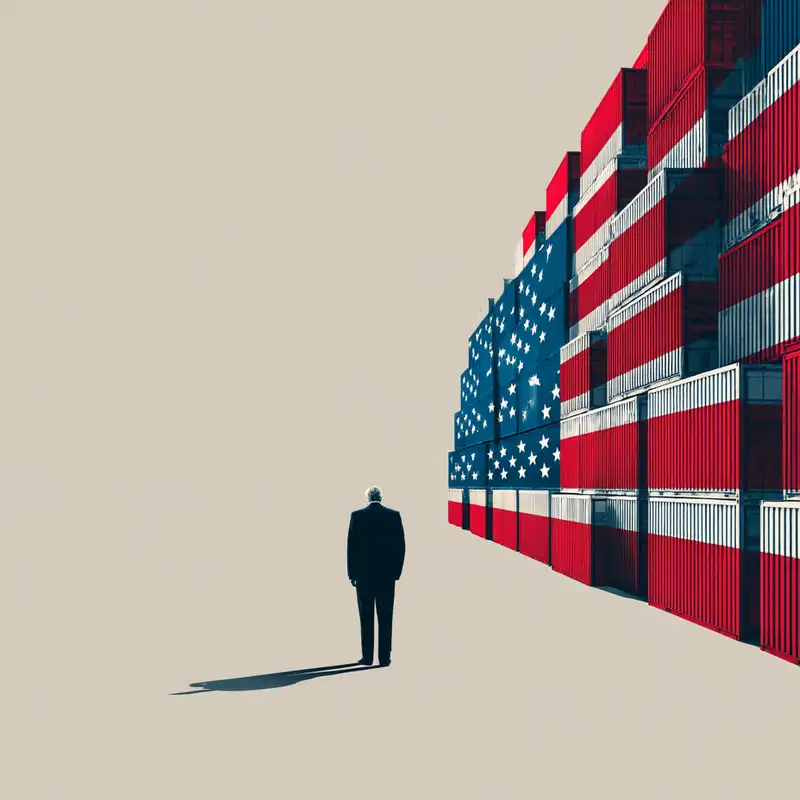
The Oligarchy Tax: Unmasking the Feudalism Behind the Market's Calm
Welcome to the deep dive. We're here to help you get genuinely well informed, especially when things look, well, maybe a bit too calm on the surface.
Penny:That's right.
Roy:It's Monday, 08/11/2025. And, you know, if you just glance at the headlines, you see futures ticking up
Penny:a
Roy:bit.
Penny:Modestly higher.
Roy:Media celebrating, you know, another record breaking run looks pretty peaceful, almost
Penny:serene. Deceptively so perhaps.
Roy:Exactly. But as we always find here on the deep dive, the really big shifts, the stuff that actually changes things, well, rarely happens right out in the open.
Penny:Mhmm. Usually underneath.
Roy:Yeah. Driven by these complex, powerful undercurrents that are, like, fundamentally reshaping the whole financial world. So today, we're not just gonna skim those headlines.
Penny:No. Totally. No.
Roy:We're gonna peel back the layers, really try to figure out what's driving these shifts and crucially what it all means for you.
Penny:Indeed. And our mission today really is to pull out the most important nuggets of knowledge from this really insightful piece that came out just this morning. It's titled Monday Madness, The Oligarchy's Grip on Markets, written by Phil. And it's just the kind of deep financial insight and market analysis that helps get beyond those superficial reports. Right.
Penny:It's actually a great example of the sort of critical thinking you find on premier sites like philstockworld.com. They're known for cutting through the market euphoria to find what's really happening.
Roy:That's a good point.
Penny:So we're gonna look at the week's critical data, these policy shifts, and what the article basically calls the systematic dismantling of the global economic order.
Roy:Wow. Okay.
Penny:Yeah. And this is really for you, our listener, if you wanna understand what what real investors are watching when the market looks calm, but maybe hides these huge tectonic shifts.
Roy:And it's definitely worth mentioning, the source we're drawing from today, philstockworld.com, it's a real leader in stock and options trading education.
Penny:Absolutely.
Roy:They offer these invaluable perspectives for, you know, both new traders and experienced ones. It's about building understanding, not just reporting news bites.
Penny:That's the key difference.
Roy:You can find much more detailed analysis and like a whole wealth of educational stuff on their site, philstockworld.com. And, you know, they've been highlighted by respected places like Forbes Finance Council and investing.com. Right. That really says something about the quality of the perspectives they offer.
Penny:It really does. And the site, it isn't just about pushing out analysis. It actually fosters this really vibrant community.
Roy:Oh.
Penny:Mhmm. Yeah. Members can genuinely enhance their skills, you know, through interactive discussions, great educational articles, live webinars. It's a place to learn, connect with other informed people, and really sharpen your own critical thinking.
Roy:That community aspect is important.
Penny:Definitely. And the founder, Phil Davis, I mean, is recognized by Forbes as a top influencer in market analysis. He's trained a lot of top hedge fund managers.
Roy:Wow.
Penny:So that background, that pedigree, it certainly adds weight and, you know, credibility to the insights we're diving into today.
Roy:Okay. That absolutely sets the stage. So the article kicks off by noting this exact dynamic we're talking about. Futures ticking up quietly, media celebrating.
Penny:Yeah, the usual noise.
Roy:But then it pivots immediately. It says the smart money is actually quietly bracing for chaos. Why?
Penny:Right. What do they know?
Roy:Because underneath that shiny surface, the article argues, we're witnessing what it calls the systematic dismantling of the global economic order.
Penny:That's a heavy phrase.
Roy:It is. And it says it's happening quote, one tariff, one revenue sharing deal and one constitutional violation at a time. That's a huge claim, isn't it? Sounds almost, well, conspiratorial maybe. But the article lays out very specific things.
Roy:Let's not just gloss over that. What's the end game here according to the author? A new order or maybe something old in a new package.
Penny:That's exactly the core of it. What the article calls an inflection point isn't just, you know, a market dip or a minor correction. Right. It's describing this moment right now as one where the market's calm is just this thin deceptive layer.
Roy:Like ice on a pond.
Penny:Exactly. Covering up this profound tectonic shift happening underneath, this isn't a small blip. It's a fundamental structural change that, as the author puts it quite dramatically, could turn this kind of Sunday night lull into a Monday morning maelstrom.
Roy:Okay. So calm before the storm.
Penny:But a storm brewed not from, like, normal economic cycles, but from deliberate policy choices. That's the key difference. Wow. It really raises a critical question for all of us, doesn't it? What kind of surprises are barreling on us and how are they fundamentally reshaping everything beyond just the daily headlines?
Penny:Is it deglobalization, economic blocks, something else entirely?
Roy:And building on that, the article really doesn't mince words. It says we are actively witnessing this systematic dismantling of the global economic order.
Penny:It's active right now.
Roy:It's bold, kind of alarming frankly.
Penny:Yeah.
Roy:But it backs it up with these specific mechanisms. One tariff, one revenue sharing deal, one constitutional violation at a time.
Penny:It's the specifics that make it chilling.
Roy:Right. It's not just economic tinkering. It's like re architecting how global trade and power work brick by brick or maybe, you know, tariff by tariff, deal by
Penny:deal. Methodical.
Roy:Yeah. The article suggests it's a deliberate, methodical strategy to change the actual rules of the game, not just random market noise. It's a long game happening right in front of us if you know where to look.
Penny:And the implications are huge. It suggests a move away from established international norms towards something more fragmented, more nationalistic, maybe more protectionist.
Roy:Feels that way.
Penny:And this dismantling, the article really hammers this point, is precisely why looking at history is so crucial
Roy:right
Penny:now.
Roy:Okay.
Penny:It says quite clearly, if history has taught us anything, it's that the markets really don't like surprises.
Roy:That seems like investing one zero one. Right?
Penny:It is. But it's foundational here. It sets the context for looking at the specific surprises the article digs into. History shows that these periods of unexpected policy shifts, geopolitical instability or just changing the rules of the game, they often lead to more volatility, assets getting repriced.
Roy:Makes sense.
Penny:And these aren't just random events. They're often deliberate choices, shifts in power designed to create new winners and losers, sometimes at the expense of established norms or even, you know, constitutional law.
Roy:Which the article mentions.
Penny:Exactly. So understanding this historical aversion to unpredictability helps us grasp just how big the current shifts might be and why a market that looks calm might be totally unprepared for what's really brewing.
Roy:It suggests this isn't just a phase.
Penny:No, potentially a napocal shift.
Roy:Okay, so markets hate surprises. If that's true, then what the author brings up next about Nvidia and AMD. It's really astounding. Maybe the most disturbing headline that, like you said, most people totally missed.
Penny:Yeah, this one is something else.
Roy:The article says NVIDIA and AMD, these absolute tech giants, have apparently agreed to pay the US government 15% of their revenue from chip sales to China.
Penny:Revenue, not profit.
Roy:Revenue. Let that sink in. Not profits which would already be huge but 15% off the top line just for the right to sell in China.
Penny:It's unpress
Roy:It really feels like it. It's not just a tax or a tariff. It's like a direct demand for a cut of their gross sales. Yeah. It feels almost medieval, like a fundamental shift in how companies interact with governments.
Penny:Moving way beyond traditional trade rules.
Roy:Yeah. It really signals a new era of maybe economic coercion.
Penny:It absolutely does. And this really hits the core of what the article calls digital age racketeering with a commerce department stamp.
Roy:Wow. Racketeering.
Penny:Yeah. And that quote from the former US trade negotiator, Steven Olsen, we've entered into a new and dangerous world. It captures it perfectly.
Roy:It feels dangerous.
Penny:Because this arrangement where the government can basically demand a tribute, you know, a percentage of sales just for permission to operate, it's a huge departure from free market principles.
Roy:Totally.
Penny:It implies a system where market access isn't a right based on competition, but something you have to buy politically.
Roy:And the implication for other businesses.
Penny:That's the critical part. If this is the precedent for NVIDIA and AMD, who's next? Could this happen to pharma companies wanting access elsewhere or big consumer brands? Right. It fundamentally changes the global playing field.
Penny:It favors the giants, the ones with deep pockets and political pull over maybe smaller, more innovative companies.
Roy:It's just from merit to patronage.
Penny:Exactly. Political patronage, the systemic shift.
Roy:And what's just baffling from a standard market view is the initial reaction. Nvidia and AMD stock Mostly held up.
Penny:Yeah, investors cheered. They called it clarity.
Roy:Clarity. The article has this cynical but maybe depressingly accurate take. Because in an oligarchy, being on the inside is incredibly profitable until you are suddenly not. But that will be tomorrow's problem. Right?
Roy:Ouch.
Penny:But maybe true.
Roy:It suggests investors aren't scared by this. Some see it as a new kind of moat, a competitive advantage.
Penny:A barrier to entry that helps the big guys.
Roy:Right. It benefits the incumbents who can afford to play this game, pay the tribute, get the exemptions. It's like this perverse short term game, this weird kind of certainty that maybe blinds them to the huge long term systemic risks.
Penny:Profiting from a system that's eroding the very foundation
Roy:A chilling thought.
Penny:And that short term thinking, it also bumps up against some really serious legal issues as that trade expert Deborah Elms points out.
Roy:Right, the constitutional part.
Penny:Yeah, she warns this whole arrangement looks like an export tax which is forbidden by The US constitution. The article cites article one section nine. It explicitly says no tax or duty shall be laid on articles exported from any state. This looks like a direct challenge to that, a big executive overreap.
Roy:Does that matter anymore?
Penny:Well, that's the article's pointed rhetorical question, isn't it? But when has constitutional law ever stopped a determined autocrat?
Roy:Right.
Penny:It's not just about the legal fine print. It's about the erosion of checks and balances, the very stuff that underpins the democracy. It implies a willingness to just push past legal boundaries, daring the system to react.
Roy:Which creates massive uncertainty for business.
Penny:Absolutely. The rule of law, which markets rely on, seems to be taking a backseat to political convenience.
Roy:And the coercion aspect here. It's almost explicit. The article brings up Trump's past threat threatening a great depression if courts ruled his tariffs illegal.
Penny:Yeah. I remember that.
Roy:The message is crystal clear and frankly chilling. Comply or we'll crash the economy.
Penny:It's not negotiation. It's a threat.
Roy:Exactly. A strong-arm tactic.
Penny:Yeah.
Roy:So what does that mean for the rule of law, for judicial independence, for just the basic freedom of businesses to operate without, you know, government extortion?
Penny:It paints a really bleak picture.
Roy:Where the threat of economic collapse itself becomes a political weapon. That changes everything for how businesses plan, assess risk Mhmm. Whether they can even rely on a predictable environment.
Penny:The level playing field just evaporates.
Roy:Meanwhile, while the Apples and Nvidia's are cutting these huge deals, paying their tributes
Penny:Getting their exemptions.
Roy:Right. The article shines a light on the silent victims. Yeah. 236,000 small US businesses just getting hammered.
Penny:That's a staggering number.
Roy:In the cost. Yeah. An estimated $202,000,000,000 annual tariff hit. You break that down per firm? Yeah.
Roy:It's like $856,000 per small business, per year.
Penny:Woah. $856,000.
Roy:Yeah. That's not some abstract macro number. It's a direct, punitive cost that many just cannot absorb.
Penny:Impossible for most.
Roy:And crucially, these companies, they don't have billion dollar tribute budgets or direct lines to Mar A Lago.
Penny:No leverage. No lobbyists in the same way.
Roy:Exactly. They can't negotiate their way out. They just have to eat it, pass it on, or go under.
Penny:It's a totally disproportionate burden, a core part of this oligarchy tax idea.
Roy:And the National Retail Federation, they're not pulling any punches either. The the article quotes them. Small businesses especially are grappling with the ability to stay in business.
Penny:Directly contradicting the narrative.
Roy:Totally. How does the claim that this is all pro business or pro American square with driving a quarter million small businesses to the brink?
Penny:It doesn't square.
Roy:It really makes you question who actually benefits here and at what cost to everyone else. The data suggests this huge quiet transfer of burden away from the giants onto the backbone of the economy.
Penny:Classic case of the little guy taking the hit.
Roy:And that narrative, the article says, is just destroyed by Goldman Sachs' own data.
Penny:Ah, the data.
Roy:It shows US businesses have absorbed, what, 64% of tariff costs so far? But, and this is key, that's not the end of the story.
Penny:Right, it's shifting.
Roy:That share is projected to plummet to under 10% as companies just can't absorb anymore and they start passing those costs down the line. To us.
Penny:It's not theoretical. You can see it happening in the supply chain data. Businesses hit a breaking point.
Roy:Absorption isn't feasible forever.
Penny:Nope, they have to externalize it. Push it down until it lands right in household budgets. It's like a ticking time bomb for consumer prices.
Roy:And that externalization, the article lays it out, means that by December, consumers like you will shoulder a massive 67% of this burden.
Penny:67%.
Roy:And it's not just slightly higher prices. It's projected to push core inflation up to 3.2% year over year.
Penny:Which is way above the Fed's target.
Roy:Way above their 2% target. This just nails the article's point. Tariffs are a massive tax on American families disguised as economic nationalism.
Penny:Keeps you right in the wallet.
Roy:Yeah. Furniture, cars, toys, appliances, everything costs more. The protectionism story is just cover for what's basically a broad tax hike on regular people.
Penny:Affecting purchasing power, standard of living, everything.
Roy:Okay. So building on that inflation point, the article flags Tuesday's CPI report as potentially the most important data release of the year.
Penny:Huge focus this week.
Roy:Expectations are already high. July CPI at 2.8% year over year, core inflation climbing to 3%. And the crucial part, the driver.
Penny:Not organic growth.
Roy:No. It's driven largely by tariff induced price spikes in everything from furniture to automobiles. These are just the early effects.
Penny:Policy driven inflation.
Roy:Exactly. Not inflation from a booming economy which the Fed knows how to handle, theoretically. This is inflation born directly from policy choices, from tariffs. And that distinction is critical for understanding the Fed's impossible situation.
Penny:How do fight you that with monetary policy?
Roy:Which brings us right to what the article calls the Fed's impossible situation. Inflation's rising but it's not economic fundamentals causing it, it's policy.
Penny:So the tools don't match the problem.
Roy:Right. How do you fight policy driven inflation with monetary policy? The article says, basically, you can't, not affect the
Penny:The Fed's tools, interest rates, they're meant for managing inflation from, you know, normal supply and demand, the economy's natural rhythm.
Roy:But when inflation comes directly from tariffs.
Penny:Those tools become blunt, ineffective, maybe even counterproductive. It's like trying to fix a leaky roof by adjusting the thermostat.
Roy:You're addressing the actual cause creates this huge policy disconnect.
Penny:And this creates a deeply uncomfortable political economic trap for Fed Chair Powell, for the whole Fed really.
Roy:Trap towel.
Penny:They're trapped between political oppression to cut rates and economic reality, which demands they hold rates steady.
Roy:Right. Because cutting rates could make this policy driven inflation even worse.
Penny:Exactly. And the article mentions Trump openly demanding rate cuts while simultaneously fueling inflation through tariffs.
Roy:Putting the Fed in an absolutely no win position.
Penny:Totally untenable. Do they cave to political demands and risk worse inflation? Or do they stick to their mandate, hold steady, and face intense political heat, maybe undermining their own independence?
Roy:It's a crisis of independence for the Fed.
Penny:Yeah. Their credibility, their effectiveness, market confidence, it all hangs in the balance.
Roy:And yet, despite all this
Penny:Yeah.
Roy:The market, the article says, is pricing in 85% odds of a September rate cut.
Penny:85%.
Roy:Which the author just skewers as as if this is all a game. That disconnect is just wow.
Penny:Like the market's living in a different reality.
Roy:Meanwhile, treasuries are bouncing all over the place, yields swinging like crazy on rumors, and as the article mentions, fake data concerns after that recent BLS drama.
Penny:Right. Trust in the data itself is eroding.
Roy:Which makes predicting anything incredibly hard. Oh. So what does this mean for market predictability when you can't even trust the basic numbers and the market seems to be getting against the fundamentals?
Penny:It creates an environment that's just ripe for sudden shocks. Confidence could vanish overnight.
Roy:Which leads to the article's really profound, maybe unsettling question. Yeah. The real question isn't just how Dubuque Fed will act, but whether they can act or if the entire system is now caught in a feedback loop of policy chaos.
Penny:Wow. Can they even act effectively anymore?
Roy:It's not just about raise or cut, it's whether their actions even matter in a system swamped by this policy induced chaos. This idea of a feedback loop of policy chaos it suggests we're beyond normal cycles.
Penny:Like the system is fighting itself.
Roy:Yeah if Fed policy is battling political policy and the political policy is causing the problem the Fed is supposed to fix the whole thing could become self defeating.
Penny:Spinning your wheels or worse.
Roy:Makes traditional forecasting almost useless, hence at a deeper systemic instability.
Penny:Let's shift gears a bit then to the geopolitical side. Another huge factor in what the article is calling this crunch week,
Roy:Okay.
Penny:The US China trade truce, it expires tomorrow, August 12.
Roy:TikTok.
Penny:Yeah. There are whispers about an extension, maybe, but the article points out there's nothing solid, not even with, like, twenty four hours left.
Roy:That uncertainty alone must be creating huge anxiety.
Penny:Across global markets, supply chains, especially for companies built on that cross border trade. Think about sectors heavily reliant on Chinese manufacturing or consumers.
Roy:How can they plan long term in this environment?
Penny:They can't, really. It's incredibly difficult.
Roy:And amidst this uncertainty, the article highlights Trump's latest move, demanding China quadruple its US soybean purchases.
Penny:Quadruple? Which analysts in China are calling extremely improbable? Maybe impossible.
Roy:So if it's impossible, why demand it?
Penny:Well, the article answers that directly, but that's not the point. The point is leverage and theater.
Roy:Political theater.
Penny:Yeah. Less about real negotiation, more about a public show of force. Playing to the home crowd, even if it doesn't lead anywhere productive on trade itself. It keeps the pressure on, creates a bargaining chip, however unrealistic it might be.
Roy:Optics over substance.
Penny:Seems like it.
Roy:And the real world fallout from this escalating trade war, it's already visible, right, in the supply chain shifts.
Penny:Strikingly visible, the article details this dramatic split. China's export to Southeast Asia surged up 16.6% in July.
Roy:While US shipments
Penny:Plummeted down 21.7%.
Roy:Wow. That's a huge divergence.
Penny:It's not hypothetical. It's happening right now. Manufacturers are scrambling, rerouting, trying to beat deadlines, or just find more stable trade routes.
Roy:And the article's conclusion on this.
Penny:Stark. The global supply chain is already fragmenting and not toward American shores, but away from America's now greedy reach entirely.
Roy:So not reshoring, but just shifting elsewhere.
Penny:Exactly. It's a massive reshaping of global commerce.
Roy:Yeah.
Penny:Could have really long term effects on US competitiveness, consumer costs, availability of goods, everything.
Roy:A fundamental shift in how stuff gets made and moved.
Penny:And what's really compelling is how quickly you see these ripple effects, these seemingly disconnected events that show just how deep the fragmentation is.
Roy:Like what?
Penny:The article gives concrete examples. China's South City, one of China's biggest builders by assets, just got liquidated by a Hong Kong court.
Roy:That's not
Penny:No. It's a major collapse in a key sector. Yeah. Could signal deeper issues in China's property market with potential knock on effects for global banks' investments.
Roy:And the other example?
Penny:Battery giant CATL shutting down a major lithium mine in China. Lithium prices shot up 19% overnight.
Roy:Wow. Lithium is critical for EVs.
Penny:Absolutely critical. So a price surge like that hits every EV maker, Tesla, BYD, everyone could impact production costs, consumer prices, maybe even the speed of EV adoption globally.
Roy:Now these aren't isolated things.
Penny:No. They're direct tangible results of the trade tensions and policy shifts the article's been talking about, shows just how interconnected and frankly fragile the whole system has become.
Roy:Okay. So while politicians are playing these games of tribute politics and tariffs are grabbing headlines, there's another massive shift happening, maybe even more transformative, transformative that the article highlights.
Penny:What's that?
Roy:The AI revolution. It's quietly eviscerating entire industries.
Penny:Ah, AI, the silent disruptor.
Roy:Yeah, it's seismic, maybe not always daily news, but it's fundamentally changing the business landscape, creating winners and losers at an incredible speed, a stealth revolution under our noses.
Penny:And Bank of America has apparently been tracking this.
Roy:Yeah, 26 companies identified as most at risk from AI. Not a few names either. Categories like web developers, digital imaging firms, service businesses with lots of employees.
Penny:Industries relying on skills AI can now replicate or automate.
Roy:Exactly. And the data. It's stark. These companies have all underperformed the S and P 500 by a massive 22 percentage points just since May.
Penny:22%. That's not a dip. That's a collapse.
Roy:It's huge. A clear sign of structural change leaving whole sectors behind. It makes you ask like the article does, at what point do you declare an emergency?
Penny:Yeah. That level of underperformance suggests entire business models are just becoming obsolete. Could mean widespread job losses, major economic disruption.
Roy:And the speed of this change.
Penny:Yeah.
Roy:It's accelerating way faster than people thought.
Penny:How fat.
Roy:The article quotes Futurum Group CEO, Daniel Neiman. We thought the disruption would happen over five years. It seems like it's going to happen over two.
Penny:Wow. Five years down to two.
Roy:That's where it gets really significant. The window to adapt is shrinking incredibly fast for businesses, individuals, even policy makers.
Penny:No time for slow adjustments.
Roy:Right. People who thought they had years might only have months. It ramps up the risk for the unprepared and the opportunity for those who can pivot quickly. Challenges all the usual long term planning.
Penny:And history has warnings here, doesn't it?
Roy:It does. The article points out every transformative technology creates winners and losers. The winners get the headlines. The losers get unemployment checks.
Penny:Sobering but true.
Roy:Think about the industrial revolution. Mhmm. Artisans replaced by machines. Or the internet wiping out some industries while creating others. We focus on the AI winners, the breakthroughs.
Penny:But there's a painful side. Industries, people whose skills are suddenly less valuable.
Roy:Ignoring that misses a huge part of the story and underestimates the wider societal impact.
Penny:And this disruptive force AI is hitting a market that's already looking shaky.
Roy:Exactly. The article notes, Record numbers of fund managers now calling US stocks too expensive.
Penny:Price for perfection already.
Roy:Which leads to the article's really crucial kinda chilling question. Maybe it's time to ask what happens when AI's creative destruction meets a market that is already priced for perfection.
Penny:What does happen?
Roy:Well, what does it mean for investors? It means the margin for error is razor thin. Any big negative shock from AI or tariffs or anything else could trigger a sharp correction, especially in those high flying growth sectors.
Penny:Combination of tech upheaval and inflated expectations.
Roy:Yeah. Creates a really precarious situation. Demands way more caution, more discernment from investors.
Penny:Okay. Let's try to pull all these threads together. We've talked tariffs, these weird revenue deals, constitutional questions, small business pain, policy driven inflation, the Fed's bind, trade wars, AI.
Roy:It's a lot.
Penny:It is. But the article ties it all together under this one big theme, the rise of what it calls the oligarchy tax.
Roy:And it illustrates this oligarchy tax in action with these really stark comparisons. You put them side by side, the pattern is just unavoidable.
Penny:Okay. I laid them out.
Roy:You've got Apple pays this massive like $600,000,000,000 tribute, gets tariff exemptions, advantage Apple, TSMC agrees to build huge strategic plants in Arizona, gets exemption special treatment, NvidiaMD, agreed to that 15% revenue cut on China sales. Kids keep selling there.
Penny:You're
Roy:right. Now contrast that with small businesses, they're stuck paying that estimated $856,000 annual tariff tax and they get nothing. No deals, no access, just the full burden.
Penny:Wow. It's like two different economic systems running at the same time.
Roy:Exactly. One for the connected giants, another for everyone else trying to survive.
Penny:And this disparity, this is what leads to the article's really provocative conclusion.
Roy:Which is
Penny:This isn't capitalism, it's feudalism with stock options.
Roy:Feudalism with stock options. That's powerful.
Penny:Implications are huge. It suggests a system where success isn't about innovation or efficiency in a free market anymore. It's about how close you are to political power. Can you pay the tribute? Can you make the right political deals?
Roy:And the stock options part.
Penny:Yeah. That's particularly biting, isn't it? It suggests this new feudalism is hidden behind the mask of market gains, gives it this veneer of legitimacy even though it's fundamentally unfair.
Roy:It implies a shift away from competitive markets to something dominated by a powerful elite.
Penny:Like lords and vassals, but with financial instruments instead of land. Chelling redefines the whole American economic structure.
Roy:And maybe the most terrifying part of it all, the article says, is this paradox. It's working.
Penny:Working how?
Roy:Markets are hitting records. Mega caps are soaring. Bitcoin just blew past $121,000 as investors apparently flee traditional stores of value for anything outside of the increasingly corrupt traditional system.
Penny:So despite all the problems, the surface looks great.
Roy:That's the perplexing thing. Despite the constitutional issues, the small business pain, the inflation, the fragmentation, these superficial market metrics keep climbing.
Penny:Suggests the market, or at least a big part of it, isn't just tolerating this new, futile setup, but actually benefiting from it.
Roy:Seems that way. And it's pushing traditional investors towards alternatives outside the normal system. It's like a success story for a select few, built on a really shaky foundation for everyone else.
Penny:So what we're really watching, according to the article, is the real time transformation of American capitalism into something unrecognizably authoritarian.
Roy:That's the big takeaway theme.
Penny:When trade policy becomes a protection racket, when constitutional law gets ignored for political convenience, and when market success depends more on White House access than business fundamentals, you are not investing in a free market. You are gambling on the whims of autocrats.
Roy:Gambling on autocrats.
Penny:It's not just an economic shift, it's fundamental. It changes the whole relationship between government, business, law. Traditional analysis based on fundamentals becomes less important than understanding politics and power plays.
Roy:Guards a whole new way of thinking for investors. Reevaluating risk, opportunity, what value even means now.
Penny:Exactly.
Roy:Okay. So given all that, this incredibly complex, fast moving picture, the article does offer some clear guidance. What should real investors actually watch this week? How do you cut through the noise?
Penny:Right. Focus on the signals that matter.
Roy:First Tuesday, 08:30AM Eastern. That July CPI data. The article says it's arguably the most important release this week.
Penny:Why so critical?
Roy:It comes in hot, like 3% core inflation or more, then forget those rate cut hopes. The market's fed put that safety net idea. It just disappears.
Penny:Meaning?
Roy:Ugh. A fundamental rethink of risk. Companies reliant on cheap money could face a shock, big repricing possible, especially in those frothy growth areas.
Penny:Okay, CPI is key. What else?
Roy:Second, all day Tuesday, watch a U. S.-China trade truce deadline. The outcomes are stark.
Penny:Extension or expiration?
Roy:Right. Extension equals temporary relief, maybe a small market bounce. Expiration means immediate supply chain chaos, escalating all that fragmentation stuff, potential sharp drops in exposed stocks.
Penny:Third,
Roy:look Wednesday through Friday. How are small businesses actually reacting after their first full month under this new tariff regime?
Penny:Real world impact.
Roy:Yeah. Are we seeing bankruptcies, price hikes, supply disruptions, what's happening on Main Street? That's often a leading indicator of the real cost.
Penny:Good point. Anything else?
Roy:Finally, all week. Yeah. Keep an eye out for which CEO makes the next pilgrimage to Washington with a billion dollar tribute check.
Penny:The oligarchy tax in action.
Roy:Exactly. Tells you who's in, who's out, where the power really lies in this new landscape. These are the things to watch beyond the daily churn.
Penny:So in light of all this chaos and shifting ground, what's the advice for the prudent investor?
Roy:The article suggests a stance that's steady, skeptical and prepared to pounce when the chaos reveals the real winners and the fake ones.
Penny:Steady, skeptical, prepared sounds like a plan.
Roy:It's not about panic, it's about informed vigilance. Strategic patience.
Penny:And what's really compelling there is the emphasis on discernment. In a market this volatile, this politically charged
Roy:You need to see clearly.
Penny:Yeah. When fundamentals are being overridden by politics, the ability to critically evaluate what's real and what's not becomes crucial. You need to identify genuine value versus, like, engineered success based on temporary political favor.
Roy:See through the noise.
Penny:See through the veneer, understand the real forces, and have the conviction to act when others are maybe blinded by the chaos or just the surface story.
Roy:This deep dive really has pulled back the curtain, hasn't it? We've connected the dots, tariffs, revenue deals, AI disruption, the Feds bind.
Penny:All converging.
Roy:Yeah, converging to define this new incredibly complex economic reality. It's clearly not just about the numbers on the screen anymore. It's about power dynamics, shifting rules, the fundamental transformation of the market we thought we knew.
Penny:Really underscores why you need to look beyond the headlines and that really leaves us and you, the listener, with a pretty challenging thought to chew
Roy:on. Okay.
Penny:If the actual rules of the game are changing, shifting away from free market basics like innovation towards political access and influence. What does value even mean anymore in this new setup?
Roy:That's a deep question.
Penny:How do you, as an individual investor, navigate a system that seems to run more on whims, political deals, threats Mhmm. Than on transparent, predictable economics?
Roy:Yeah.
Penny:And maybe most importantly, what skills do you need now? Is traditional analysis enough? Or do you need to be like a political analyst too? Mhmm. It's a profound shift.
Penny:And just understanding that shift, acknowledging it's happening, that's not just first step. It might be the most critical one for figuring out how to navigate it all effectively.